
THE VETOZON JOURNAL
Dog wound healing: a case of veterinary ozone therapy
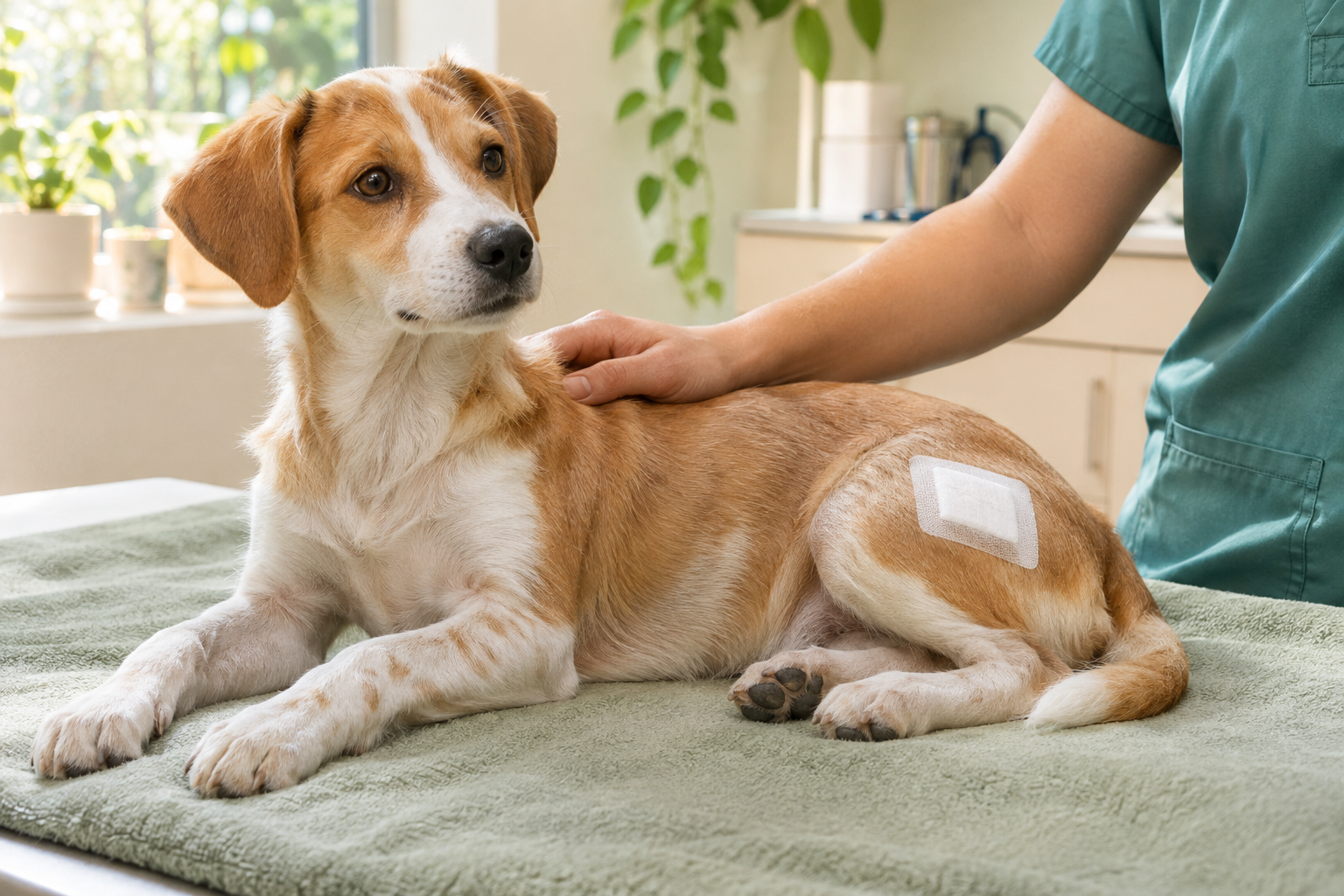
A veterinarian may consider ozone therapy to support the care of certain wounds in dogs. Bagging applies treatment to the affected area, while rectal insufflation may form part of a personalised care plan. A published case provides an encouraging example of these approaches used together with ongoing wound care.
A young dog and measurable progress
Rocha and colleagues (Pubvet, 2022) describe a one-year-old mixed-breed female dog, around 4 kg, with severe groin and flank wounds following a road accident. After an unsatisfactory response to initial care, four sessions over roughly three weeks combined bagging, rectal insufflation and topical care, including ozonated saline and oil.
By the fourth appointment, wound measurements changed from 12 × 7 to 1.5 × 0.3 cm and 9 × 6 to 1 × 0.5 cm. Photographs document this progress under combined care in one dog, without a comparison group.
The progress in photographs: from the first to the fourth session
View clinical before-and-after photographs (visible wounds)
These clinical photographs show the wounds in the published case at the start and during the combined care described in the article. Read each series from left to right, then top to bottom: first session on 22 February 2021, second on 1 March, third on 8 March and fourth on 16 March. The Portuguese labels “sessão” refer to the sessions.
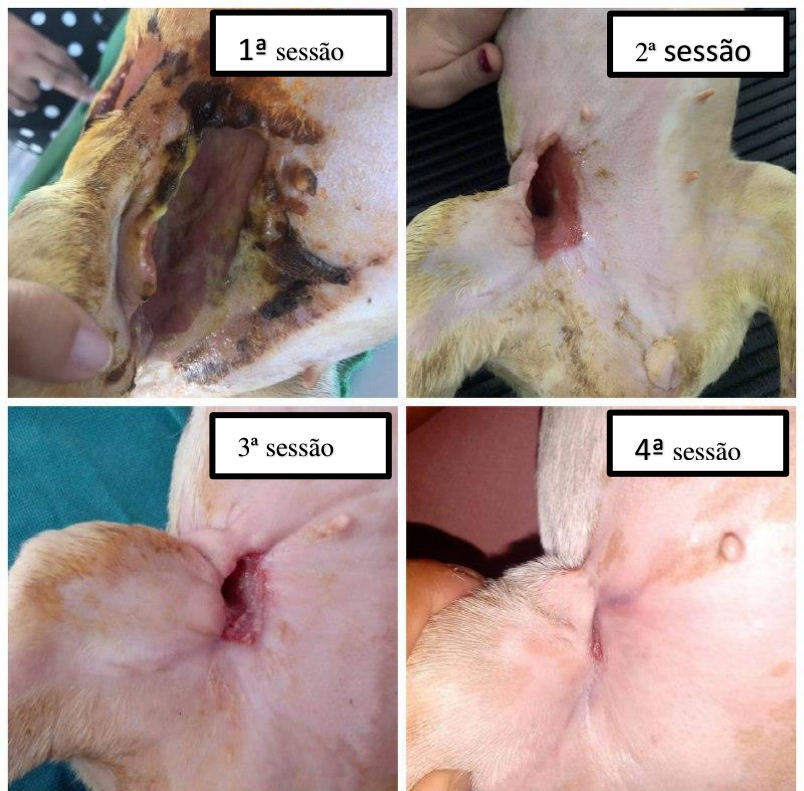
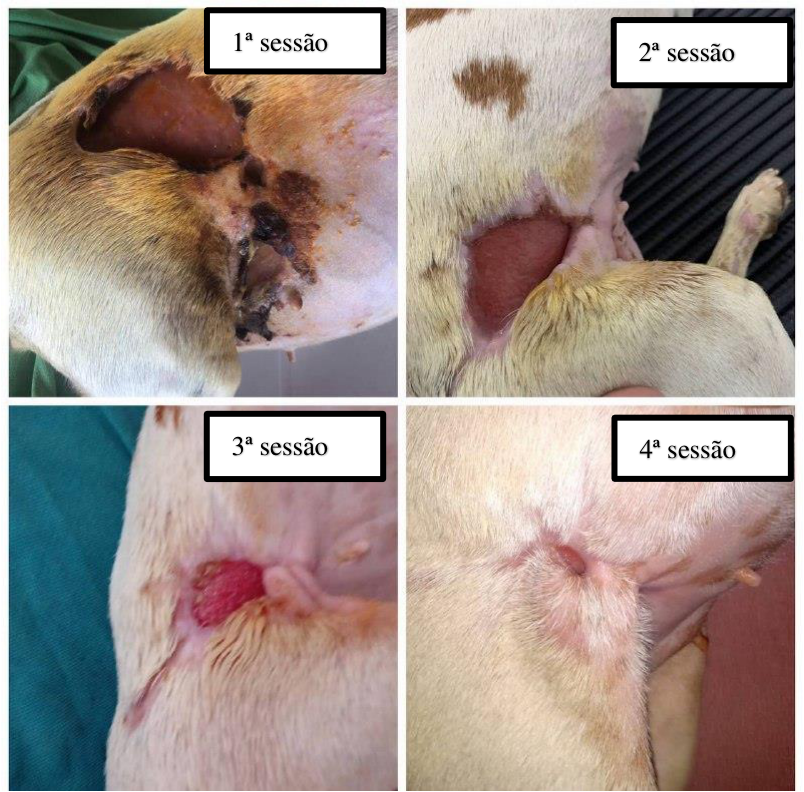
Photographs: Rocha et al., Pubvet, 2022, Figures 3 and 4, reproduced under CC BY 4.0. Figures extracted from the PDF; the wounds have not been retouched. This case comes from the cited publication and is not presented as a Vetozon network patient.
Ozone bagging: focusing on the affected area
The idea behind veterinary ozone bagging is straightforward: a suitable enclosure surrounds the treatment area so an oxygen–ozone mixture can be applied locally. Preparing the area, selecting the equipment and managing the session are veterinary tasks.
For an owner, this offers a practical conversation about care. Is the wound in a suitable location for bagging? Could sessions fit around appointments already planned? What position would help the dog settle comfortably? Discussing these points helps the vet adapt appointments to the individual dog and its temperament.
The aim is to make local treatment part of a coordinated plan with regular reviews. Your vet explains the intended goals and how progress will guide decisions to continue or adjust care. The ozonated oil mentioned in the case belongs to the authors’ reported treatment combination; Vetozon does not offer ozonated oil.
Why might a vet also consider rectal insufflation?
Rectal insufflation is another way of administering an oxygen–ozone mixture. Depending on the clinical situation, a veterinarian may discuss it as a complementary approach alongside local skin treatment.
In a 2024 crossover study by de Oliveira and colleagues, ten healthy dogs received ozone, oxygen or no intervention in successive study periods. Researchers observed transient oxidative stress followed by an antioxidant response. In everyday terms, they investigated how the body activates its defences. This provides biological insight into the route; the study did not measure wound healing.
Combining approaches therefore starts with a specific goal for your dog. The examination, other treatment and planned follow-up inform the choice. Our guide to understanding veterinary ozone therapy introduces the main concepts to help you prepare for that conversation.
Making progress easier to follow
When your dog has a wound, you want to understand whether care is moving in the right direction. Ask which signs the vet will track: wound dimensions, tissue appearance, discharge and comfort during treatment. Photographs taken under comparable conditions can complement the clinical assessment and make changes easier to discuss.
Care between appointments matters too: following prescriptions, preventing licking and caring for the wound as instructed. These principles are explained in this veterinary guide to open wounds in dogs. Before leaving an appointment, make sure you know whom to contact if the wound’s appearance or your dog’s behaviour changes.
Practical questions from dog owners
Should I wait until healing becomes difficult?
You can raise ozone therapy when discussing the care plan. A recent injury first needs prompt veterinary assessment; complementary options can then be considered with the practitioner. This gives you an opportunity to understand the proposed sequence of care from the start.
How many appointments should I plan for?
Ask for an initial schedule with a review date. The number of appointments should be adjusted to your dog’s progress. It is helpful to know what the vet wants to see at that first review and how those observations will influence the next step.
How can I plan the practicalities and cost?
Request an overall estimate covering consultations, proposed sessions, associated care and follow-up checks. Discuss travel arrangements and the time you can devote to ongoing care. Bringing those details into the conversation helps create a plan that works for both you and your dog.
Explore the options with Vetozon in Belgium
Would you like to discuss this approach for your dog? Use Vetozon’s veterinarian enquiry form for guidance within our network in Belgium. You can also contact Vetozon at info@vetozon.com or +32 499 31 74 95.